Interior design in Los Angeles runs on relationships. The general contractor who calls when a Brentwood remodel needs a designer. The custom builder in the Palisades who keeps a short list of designers they recommend to clients. The boutique developer who wants a designer for the hospitality buildout in Mid-City. The homeowner in Beverly Hills who walked through a friend's finished kitchen and asked who designed it. Most of the work that fills a designer's calendar comes through these channels, and most LA design firms underbuild them on purpose because they would rather be designing.
That is exactly the gap B2B LA fills. We are not a generalist design marketing agency. We are construction and manufacturing operators with eighteen years inside the LA market who built the outbound, search, and AI infrastructure that lets a design firm grow without the principal becoming a full-time business developer.
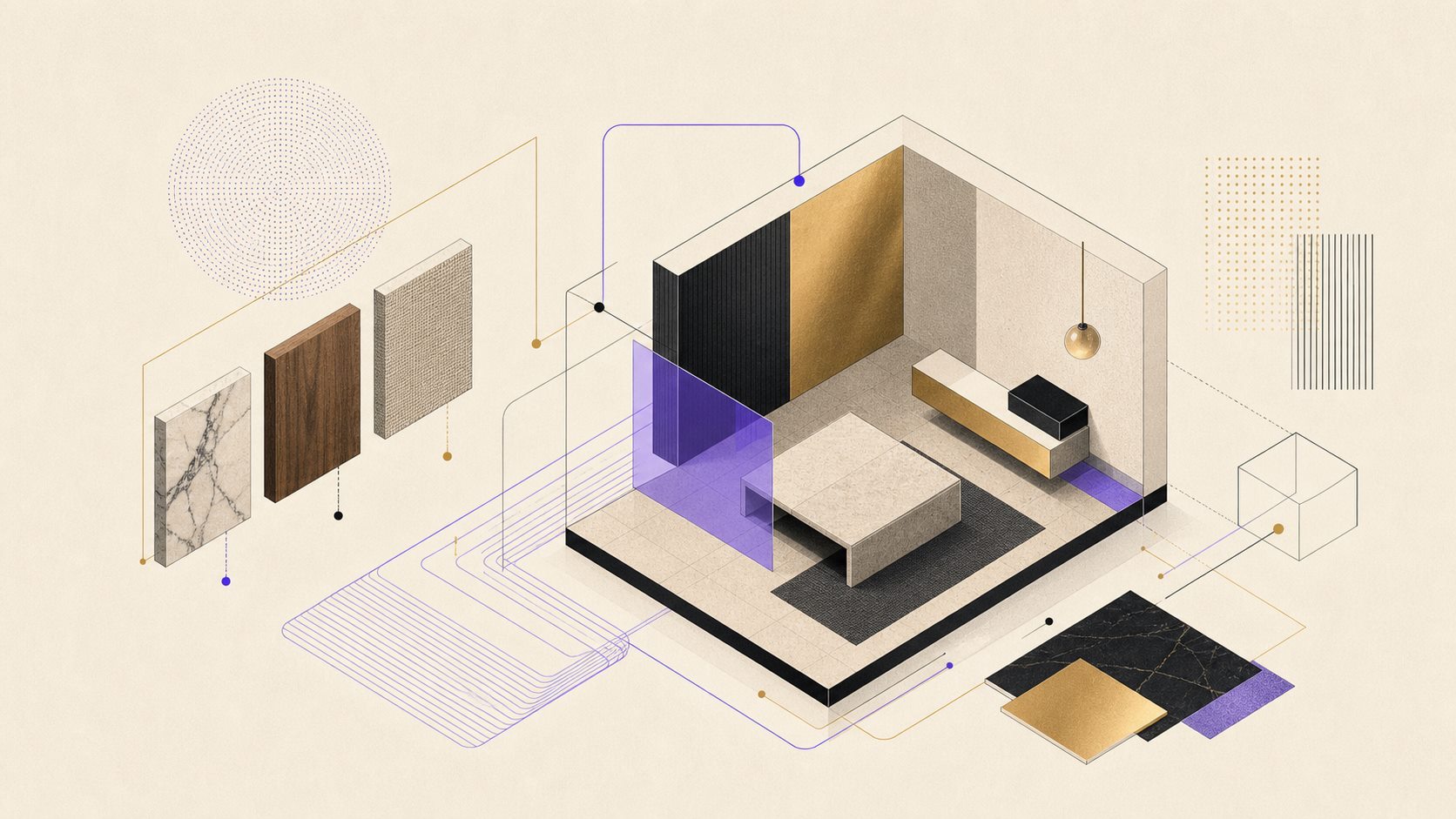
Two pipelines that feed a design practice.
For most of the LA designers we work with, the calendar is filled by two pipelines. The first is the trade pipeline - the GCs, custom builders, architects, and developers who refer designers into their projects, recommend them to clients, or pull them onto a project team early. The second is the direct-client pipeline - homeowners and small commercial owners who find the firm through Houzz, Instagram, search, publication, or a friend's finished space.
Both pipelines need active maintenance. The trade pipeline runs on visibility and relationships: who knows you, who has had a recent positive experience with your firm, who thinks of you when an opportunity comes in. The direct-client pipeline runs on content: photography, social presence, search visibility, and the credibility of your website when someone Googles the firm at 11 pm after seeing a project on Instagram.
We run both pipelines as the dedicated operations they actually are. Direct outreach to GCs, custom builders, architects, and developers in your service area. Project content on Instagram and Houzz that puts your finished work in front of designers' actual buyers. Search visibility on Google and the new AI answer engines so when someone searches for a designer in Hancock Park or a kitchen remodeler in Manhattan Beach, your firm shows up. Brand and website work that holds the moment a referral lands and the client looks the firm up.
"Most great LA designers lose work not because they are not great. They lose work because the people who could hire them never knew the firm existed."
B2B LA field notePhotography is the practice.
Interior design is one of the few B2B categories where the work itself is the marketing. A finished space, photographed well, will do more for your business than a hundred posts of inspiration content. The problem is that most firms have years of project photography sitting in folders, never edited, never captioned, never placed into the kind of structured project pages that Google and AI search engines can actually index.
We rebuild that whole pipeline. Real photography of real built work, organized into project pages with proper metadata, captions written for the kind of client you want to attract, and the long-form project narratives that get cited in AI answers and pulled up by Google for category searches. Plus the ongoing Instagram, Houzz, and sometimes LinkedIn rhythm that keeps the work in front of the right people between projects.
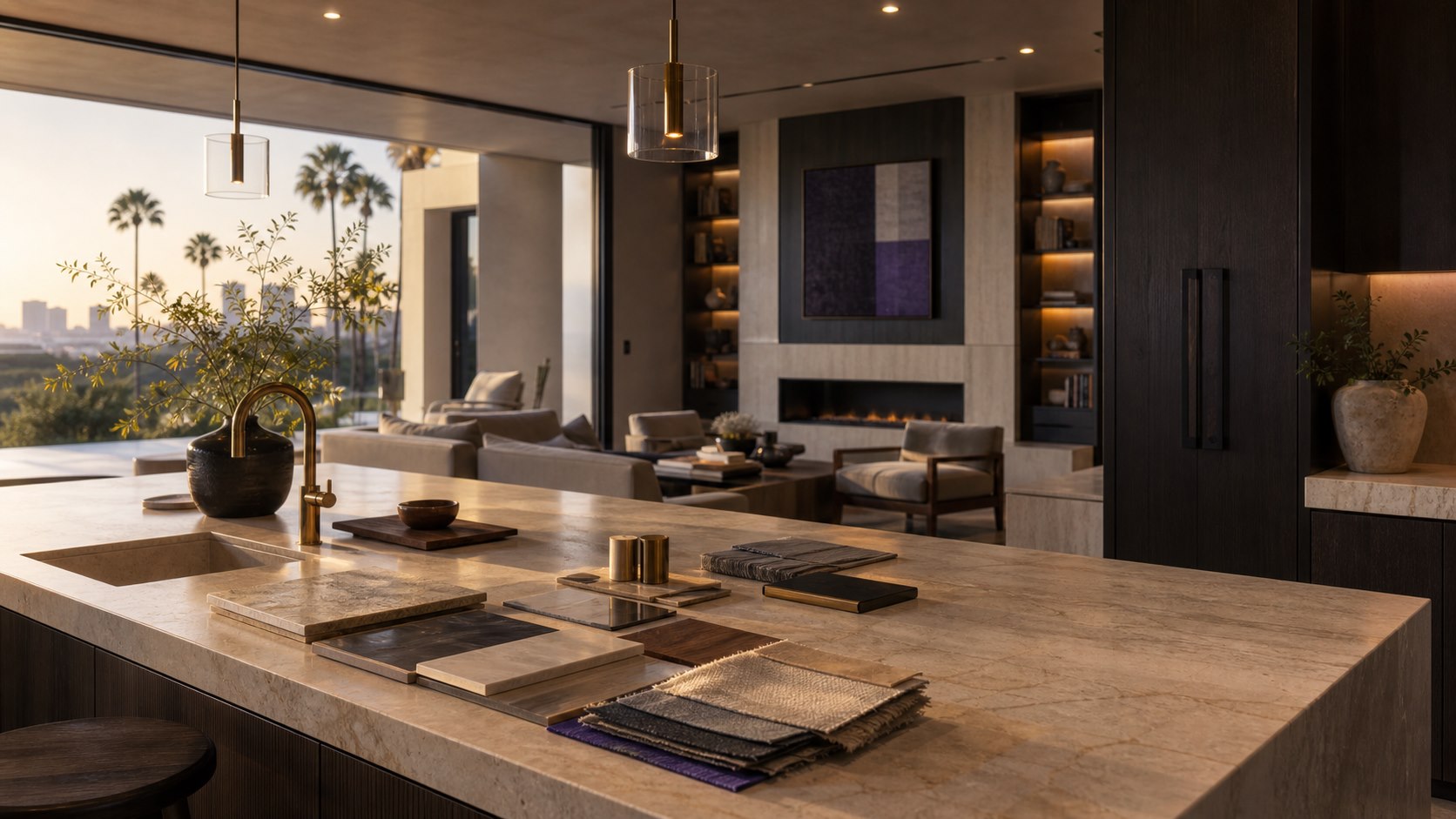
Where Houzz fits in.
For LA residential interior design, Houzz remains one of the highest-intent platforms in the market. Homeowners use it to research designers, save idea books, post project questions, and shortlist firms before they ever pick up the phone. Most designers either neglect their Houzz presence entirely or treat it like an afterthought version of Instagram, which is a missed opportunity.
We optimize Houzz the way it actually pays back. Project portfolio kept current, idea book features that get the firm in front of homeowners during research, photography organized for the platform's discovery patterns, reviews managed proactively, and the project narratives written for the way Houzz users actually scroll. Combined with active Instagram and the rest of the search stack, the Houzz presence becomes a genuine source of qualified inquiries instead of a vanity profile.
How AI shows up inside the firm.
The practical AI workflows that pay back inside a design firm are not the obvious ones. Specification documents drafted faster from past project libraries. Vendor research and material sourcing summarized from long supplier emails. Client meeting notes turned into structured action lists in seconds. Standard contract amendments and scope adjustments handled without rewriting from scratch. Internal knowledge bases trained on your firm's preferred materials, standards, and trade partners so newer designers get up to speed quickly.
None of this replaces the design judgment, the client relationship, or the constructability conversations with the GC. It just takes the long tail of administrative work that surrounds every project and gives the firm five to ten hours a week back, every week. We build it directly into the tools the firm already uses.
Design firms that work closely with contractors and manufacturers also need clear team rules for AI use. B2B LA can pair the growth work with AI training for Los Angeles construction and design teams so client notes, vendor research, spec drafts, and follow-up are prepared faster but still reviewed by the right person. If vendor requests, client updates, project handoffs, and proposal follow-up are the bigger drag, start with BPO and back-office automation for LA construction and design teams.
Category protection for design firms.
The category protection rule is especially valuable in interior design, where the LA firms competing for similar projects are often a tight set. While we are running outreach for one high-end residential designer in West Hollywood, we are not signing another. Same for Hancock Park traditional. Same for hospitality on the Westside. Same for Hollywood Hills modernist. The category is locked while we are engaged.
The first conversation.
Every engagement starts with a fit review. We look at the firm, the work, the kind of clients you actually want more of, your current trade relationships, and whether your category is open in your service area. We tell you what is realistic, what we would build, and what the timelines look like. If the work is not a fit or the category is locked, we tell you straight on the call.