The Los Angeles industrial corridor is one of the densest precision-manufacturing markets in the country. Machine shops in Vernon, Sun Valley, Santa Fe Springs, and the South Bay are turning out parts for aerospace primes, defense contractors, electronics OEMs, medical device companies, and industrial equipment makers. The shops that get on approved-vendor lists at the right primes work for years on stable contracts. The shops that do excellent work but stay invisible to those purchasing departments fight for one-off jobs against price.
Most LA machine shops are masters of the actual work. The CNC programming, the tooling, the inspection process, the certifications, the AS9100 or ISO compliance. The pipeline work - getting onto more approved-vendor lists, building search visibility, and keeping the shop in front of the right purchasing managers and engineers - usually gets handled only when the owner has time. B2B LA handles that work every week: list building, direct calls, follow-up, search updates, and reporting.
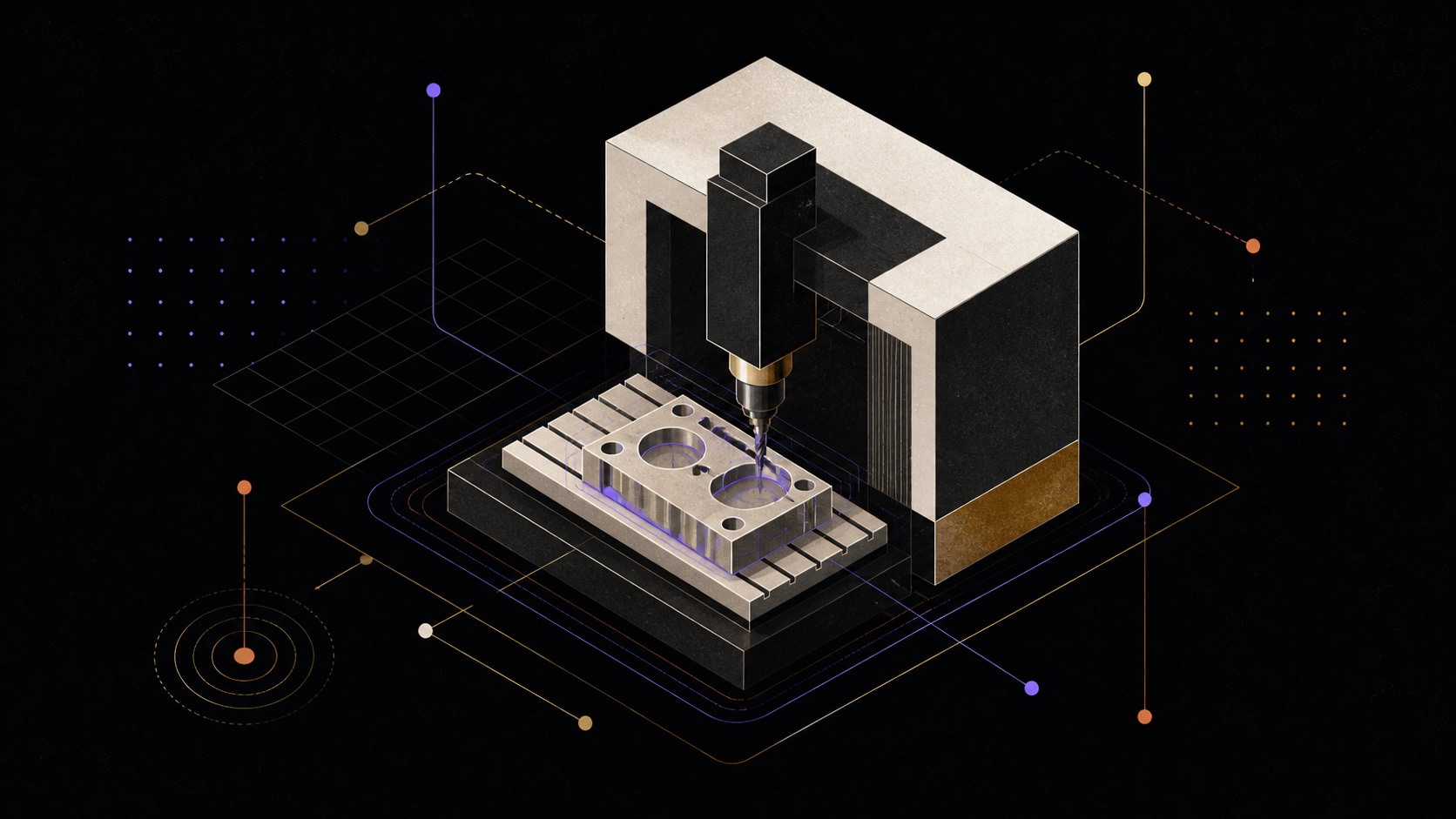
Where the work actually comes from.
The qualified buyer base for an LA machine shop lives in a few categories. Aerospace primes and tier-1 suppliers running supply chains. Defense contractors and government agencies with FAR-regulated procurement. Electronics OEMs sourcing custom enclosures, mounts, and PCB hardware. Medical device companies with FDA-validated supply chains. Industrial equipment manufacturers running production lines. Each category has different qualifications, different decision-makers, and different sales cycles, but the buyer pattern is consistent: a small purchasing team or sourcing engineer with a short list of approved vendors.
We map the shop's certifications, capacity, and capability against those categories and build the outreach list. Then we run direct B2B calls into purchasing managers, sourcing engineers, and supply-chain leads. The pitch is direct: get added as an approved vendor, set up a facility audit, become the shop purchasing calls when the spec hits. For the service behind that work, see B2B outreach for LA machine shops and manufacturers, including appointment-setting support, buyer-fit tracking, and capability proof, then read the support guide to manufacturer outreach and RFQ follow-up.
"A single approved-vendor relationship at a tier-1 aerospace prime is worth more than a hundred one-off RFQs."
B2B LA field noteSEO and AI search visibility for engineering buyers.
Industrial purchasing has changed. A sourcing engineer at an aerospace prime needing a five-axis machine shop with AS9100 in the LA area is not pulling out a directory. They are searching Google, asking ChatGPT, scrolling supplier directories, and comparing capability pages before they contact a shop. Most LA machine shops are invisible on those searches because the website does not say enough about materials, tolerances, certifications, RFQ path, inspection process, or buyer fit.
B2B LA rebuilds the website with capability pages structured around the actual searches buyers run, schema markup that helps Google and AI engines understand the shop, real photography of finished parts and shop floor, and case studies of past work for buyers in similar categories. That search layer connects back to AI SEO for Los Angeles B2B companies so industrial buyers can verify the shop after a referral, RFQ, or sourcing search.
Certifications and the credibility moment.
For shops with real certifications - AS9100, ISO 9001, ISO 13485, ITAR-registered - those are competitive moats that should be visible everywhere. We rebuild the website to surface certifications properly, organize the supplier qualification packets that get requested by every new buyer, and structure the content so a sourcing engineer can self-qualify the shop in five minutes instead of needing a full intake call.
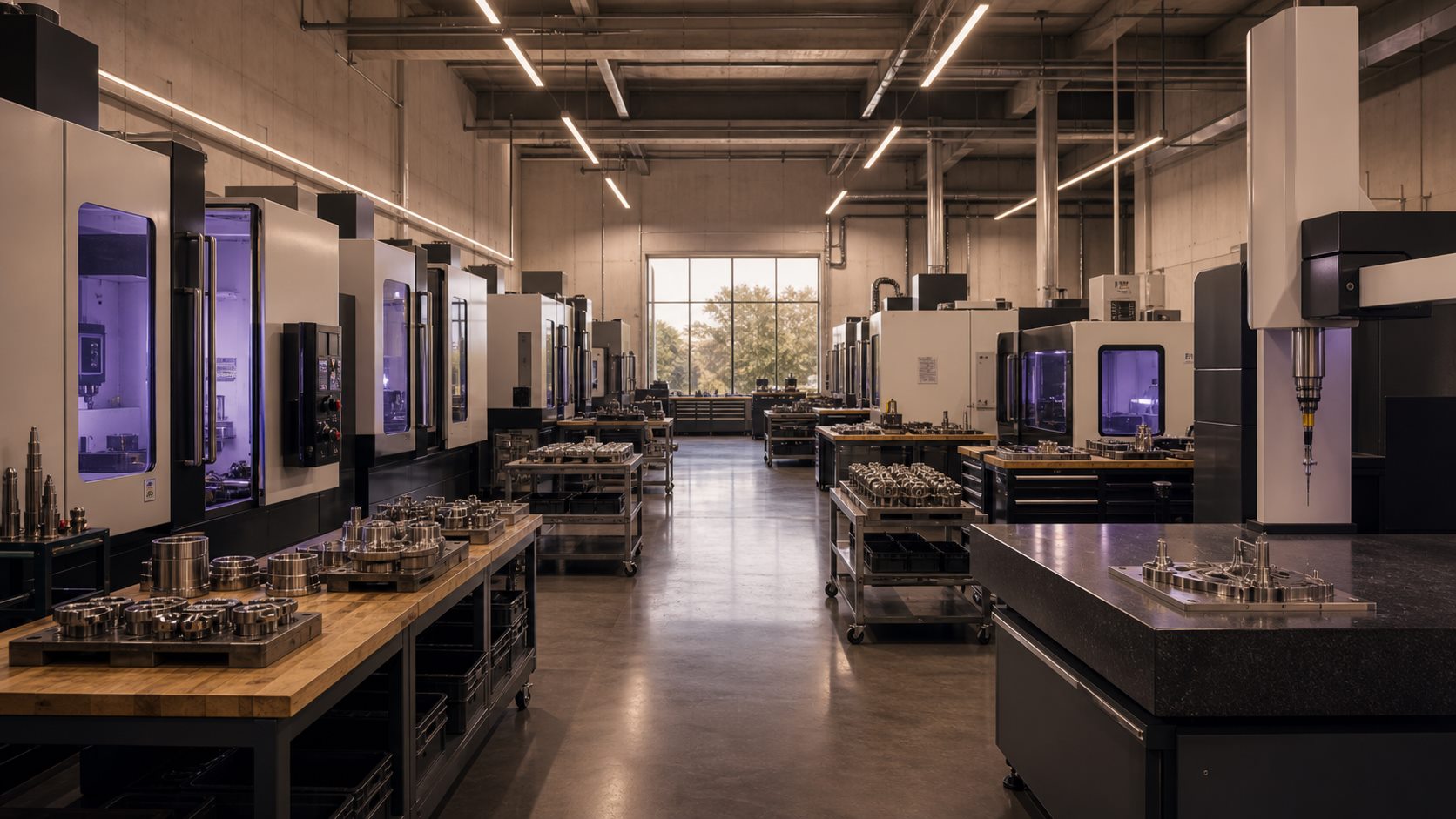
Where AI fits inside the shop.
The administrative load on a machine shop is heavy. RFQs from drawings and STEP files. Supplier qualification packets. Insurance, certification, and compliance documents. Customer communication during long production runs. Practical AI workflows can take a real bite out of every category. Faster first-pass quotes from drawings and 3D models. Auto-generated capability statements tuned to the buyer category. Document search across past production runs and customer correspondence. Standard supplier onboarding documents handled automatically.
For the office workflow layer behind those use cases, see business process automation for LA manufacturers and machine shops, including RFQ, manufacturability, costing, and quote follow-up workflows and BPO and back-office automation for LA manufacturers and contractors. For choosing the first AI workflow, source material, and review rule, see AI consulting for manufacturing companies in Los Angeles around manufacturability and costing review rules. For team rollout, prompts, and review rules, see AI training for Los Angeles manufacturers and machine shops. For the broader implementation hub, see AI training and implementation. For longer workflow support around RFQ intake, ERP exports, quote folders, supplier packets, and document search, read AI workflow automation for LA machine shops, AI training cost controls for manufacturers, and Google AI Search reporting for industrial buyers.
Turn RFQ workflow cleanup into machine-shop SEO.
Search visibility gets stronger when the public website reflects how the shop actually handles work. A machine shop that can explain RFQ requirements, drawing intake, tolerance review, inspection records, materials, lead-time boundaries, and supplier packets gives engineers more to verify before the first call. That same detail helps Google and AI answer systems understand whether the shop fits a buyer's query.
Current manufacturing guidance keeps pointing to the same practical constraint. Manufacturing Dive's September 2026 reporting on AI and ERP systems ties useful AI automation to clean data movement, clear business cases, and human review. NIST's 2026 smart manufacturing AI roadmap frames AI and machine learning around efficiency, adaptability, autonomy, digital twins, industrial knowledge models, and trustworthy manufacturing operations. For LA machine shops, the near-term SEO move is concrete: turn the cleaned-up RFQ, quote, inspection, and capability facts into public pages buyers can read and outreach teams can reference.
That is why B2B LA connects machine-shop SEO to workflow work instead of treating content as a separate campaign. A buyer who asks about a material, process, tolerance, certification, or turnaround should find a clear public answer, then see an easy path to call, send an RFQ, or ask for a supplier packet. The same cleanup supports AI SEO for Los Angeles B2B companies, B2B outreach for machine shops and manufacturers, and manufacturing process automation.
The first conversation.
Every engagement starts with a fit review. We look at the shop, the certifications, the categories you want more of, your current capacity, and whether the category is open in your service area. We tell you straight what is realistic.
Machine shop SEO and outreach FAQ.
What SEO work helps a Los Angeles machine shop get better buyers?
Start with capability pages that explain materials, tolerances, certifications, inspection process, RFQ requirements, service areas, and buyer fit. Then connect those pages to B2B outreach, approved-vendor follow-up, AI search visibility, and real project or process proof.
How does B2B outreach support machine-shop SEO?
Outreach reveals the buyer questions that should be answered publicly: capability fit, certifications, lead times, supplier packets, inspection records, and RFQ requirements. B2B LA turns those repeated questions into clearer pages and follow-up assets.
Can AI workflow automation help a machine shop rank better?
Yes, when the workflow creates cleaner public facts. RFQ intake, quote-prep rules, approved capability language, supplier packet checklists, and customer-update templates can become useful SEO content without exposing private customer data.
Should a machine shop publish fake client names or project claims for SEO?
No. B2B LA uses service-area language, real capabilities, process detail, approved imagery, and verified public facts. Fake clients, fake reviews, fake rankings, and unsupported claims are not used.